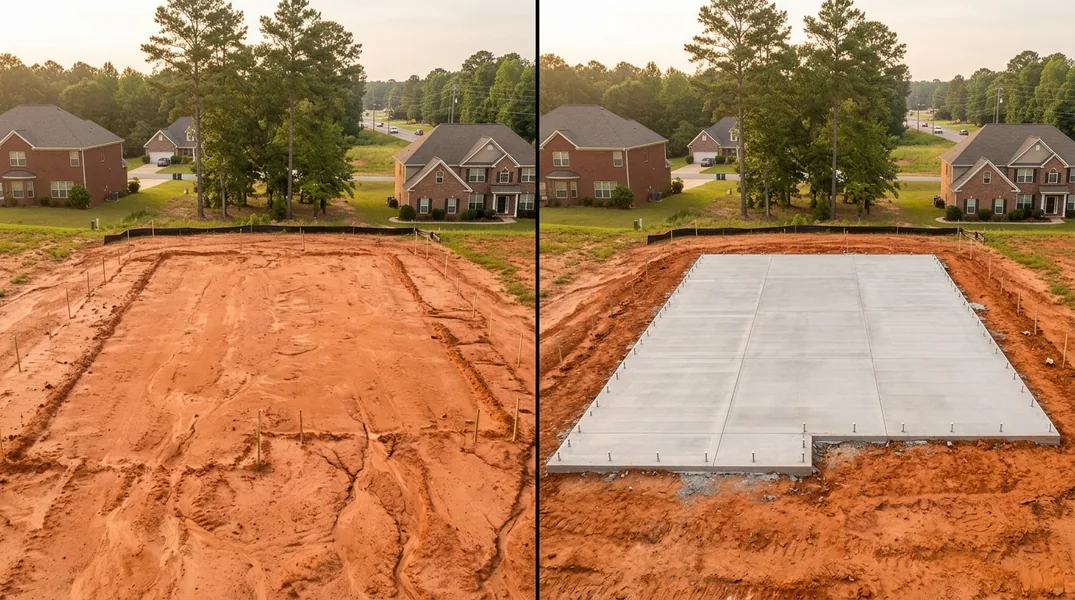
Understanding New Construction Concrete Slabs in Columbus, GA
Purchasing a new home in Columbus is an exciting milestone, but it comes with important responsibilities. One critical element that often gets overlooked during the homebuying process is the foundation slab. Your concrete slab is literally the base of your entire home, and any defects discovered after closing can lead to costly repairs and structural concerns. As a homeowner, understanding what to look for in a new construction concrete slab before you sign the final papers is essential to protecting your investment.
The foundation slab in a new home serves multiple purposes. It provides structural support for the entire house, prevents moisture intrusion from the ground, and helps maintain proper indoor climate control. In Columbus, where the local soil composition and climate present unique challenges, the quality of your slab can directly impact your home's longevity and your family's comfort. Many builders follow standard construction practices, but not all slabs are created equal, and subtle defects can emerge over time if the foundation wasn't properly installed or inspected.
The Importance of a Builder Foundation Inspection Before Closing
A builder foundation inspection is one of the most important steps in the new home purchase process, yet many buyers skip this crucial step or rely solely on the builder's assurances. This inspection should be conducted by an independent, licensed inspector who has no financial interest in the sale. The inspector will examine the concrete slab for cracks, settling, moisture problems, and proper grading around the perimeter of the home. They'll also verify that the slab was poured to the correct thickness and that proper reinforcement materials were used during construction.
During the inspection, the professional will look for signs of active movement, efflorescence (white mineral deposits on the concrete), and any evidence of water intrusion or pooling. They'll check the slope of the ground around your foundation to ensure water drains away from the house rather than pooling against the slab. This is particularly important in Columbus, where heavy rainfall and clay soil can create drainage challenges. If issues are found, you have the opportunity to negotiate repairs with the builder before closing, or to request credits that allow you to address problems after purchase. Skipping this inspection could leave you responsible for expensive Concrete Repair and Resurfacing work that the builder should have prevented.
New Home Slab on Clay: Unique Challenges in the Columbus Area
One of the most important factors affecting foundation quality in Columbus is the local soil composition. Much of the area sits on clay soil, which presents unique challenges for concrete foundations. Clay soil is expansive, meaning it swells when wet and shrinks when dry. This constant movement can place stress on your concrete slab, leading to cracks, settlement, and structural issues over time. A new home slab on clay requires extra attention during the inspection process because the long-term performance of your foundation depends heavily on how well the builder managed these soil conditions.
Proper construction of a slab on clay involves several critical steps. The builder should have conducted soil testing before construction began to understand the clay's expansion potential. The slab should be designed with appropriate reinforcement, typically steel rebar or wire mesh, to handle the stresses that clay soil creates. Additionally, the builder should have installed a moisture barrier beneath the slab to prevent water from being drawn up from the clay into the concrete, which can cause deterioration and mold growth. During your inspection, ask the builder for documentation of soil testing and slab design specifications. If this documentation is missing or inadequate, that's a red flag that warrants further investigation and possibly a more detailed engineering evaluation before you close on your new home.
What to Look for During Your Pre-Closing Slab Walkthrough
When you conduct your final walkthrough before closing, take time to carefully examine the concrete slab in your new home. Start by looking at the visible portions of the slab, typically in the garage and any unfinished basement areas. Look for cracks of any kind, paying special attention to cracks that are wider than a hairline or that show signs of active movement. Small cracks are common in new concrete as it cures, but larger cracks or cracks that continue to grow suggest a more serious problem. Check for any areas where the concrete appears to be settling unevenly or where the floor feels sloped when it shouldn't be. Walk across the slab and feel for any soft spots, which could indicate voids beneath the concrete or improper compaction of the subgrade.
Examine the perimeter of the slab where it meets the foundation walls and the exterior of the home. Look for gaps between the slab and the walls, which could allow water or pests to enter. Check that the ground slopes away from the house on all sides, creating proper drainage. Look inside the home for any signs of moisture problems, such as staining on the slab, musty odors, or visible mold. If you notice any of these issues, photograph them and report them immediately to your builder. Document everything in writing, and don't proceed to closing until the builder has addressed your concerns or provided a satisfactory explanation. Having a professional inspector present during this walkthrough is invaluable, as they can identify problems that untrained eyes might miss.
Common Red Flags and When to Request Repairs
Certain signs during a slab inspection should trigger immediate concern and action. Large cracks that are wider than one-eighth of an inch, cracks that form a pattern across the slab, or cracks that appear to be growing are all red flags. Uneven surfaces where one section of the slab is noticeably higher or lower than an adjacent section indicate settling or heaving. Staining or discoloration on the concrete, especially in patterns that suggest water movement, points to moisture problems. White powdery deposits (efflorescence) on the slab surface indicate moisture is moving through the concrete and leaving mineral deposits behind. Any of these issues should be documented and reported to the builder before closing.
When you identify problems, you have several options. You can request that the builder repair the slab before closing, which is the ideal solution. If the builder refuses or if repairs cannot be completed before closing, you can request a credit at closing that allows you to hire a contractor to make the repairs yourself. In some cases, you might negotiate a price reduction on the home to account for the defective slab. Whatever option you choose, get everything in writing and have your real estate attorney review the agreement. Don't accept verbal promises or assurances from the builder. If you're concerned about the slab's condition and the builder is uncooperative, consider hiring an independent structural engineer for a detailed evaluation before closing. The cost of this evaluation is minimal compared to the potential cost of foundation repairs after purchase.
Protecting Your Investment: Next Steps After Closing
Once you've closed on your new home and the slab has passed inspection, your work isn't entirely finished. Monitor your foundation over the first year of ownership, as new concrete continues to cure and settle during this period. Keep records of any cracks or issues that develop and photograph them for your records. Maintain proper grading around your home to ensure water continues to drain away from the foundation. If you notice new cracks or other problems developing, contact a professional foundation specialist promptly. Many builders offer warranties on new construction, including foundation coverage, so document any issues while the warranty is still active.
If you ever need professional assessment or repair work on your concrete foundation or other concrete surfaces around your new home, Columbus Concrete is here to help. Whether you're planning Concrete Driveways, Concrete Patios, or need Concrete Repair and Resurfacing services, our team has the expertise to handle projects of any size. We understand the unique soil and climate conditions that affect concrete in the Columbus area, and we're committed to delivering quality workmanship. Contact us today at (706) 249-4287 or visit our website to request a free estimate for any concrete work you need.
Looking for a professional concrete contractor in Columbus? Columbus Concrete responds fast for all your concrete needs.
Get a Free QuoteOur services: Concrete Driveways · Concrete Patios · Stamped & Decorative Concrete