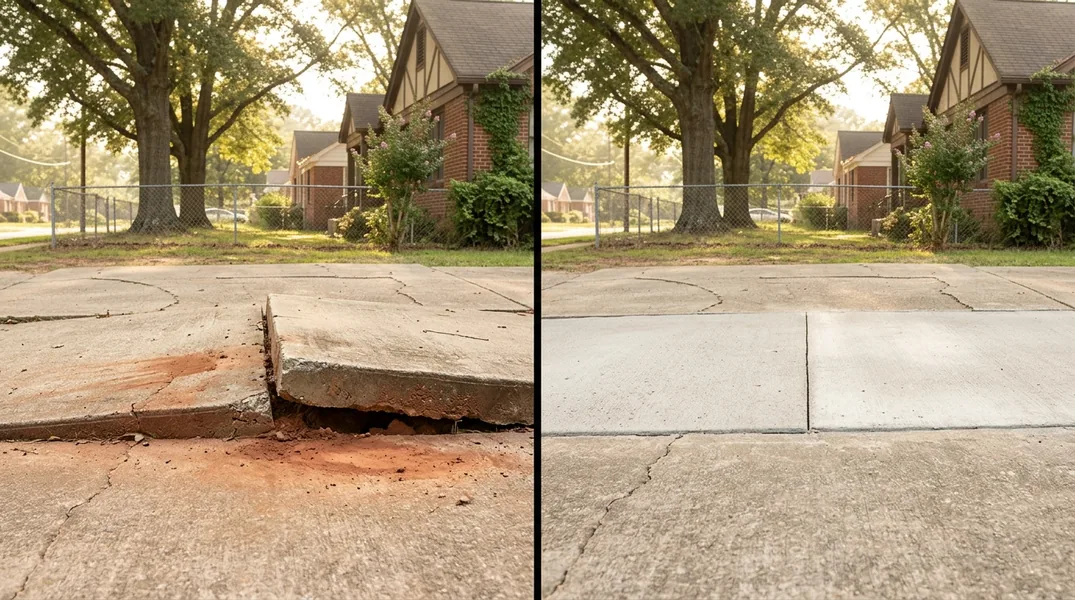
Understanding Columbus's Unique Soil Composition
If you own a home in Columbus, you've likely noticed that the ground beneath your feet feels different from other regions. That distinctive reddish earth isn't just cosmetic. The soil composition across central Georgia, particularly in Columbus, plays a significant role in how concrete performs over time. The area sits along Georgia's Fall Line, a geological boundary that creates a transition zone between the Piedmont and Coastal Plain regions, resulting in a complex mixture of clay, sand, and silt that can wreak havoc on concrete foundations and driveways.
Red clay dominates much of the landscape in this region, and it's far more problematic than many homeowners realize. This clay expands when wet and contracts when dry, creating constant movement beneath concrete slabs. Unlike stable, compacted soil in other areas, red clay is highly reactive to moisture changes. During rainy seasons, the clay absorbs water and swells, pushing upward against concrete with surprising force. When drought arrives, the clay shrinks away from the slab, leaving voids and gaps underneath. This cycle of expansion and contraction is relentless, and it's one of the primary reasons homeowners in Columbus experience premature cracking and settling issues that seem to appear out of nowhere.
Red Clay Concrete Cracking: Why It Happens in Columbus
The phenomenon of red clay concrete cracking is so common in this region that many contractors consider it a predictable outcome rather than a defect. When a Concrete Driveway is poured over red clay without proper preparation, the stage is set for future problems. The clay's natural tendency to shift and move means the concrete above it is constantly under stress. Initial hairline cracks often appear within the first year or two, especially if the home experiences a particularly wet winter followed by a dry summer. These cracks aren't merely cosmetic concerns; they're indicators of deeper movement happening beneath the surface.
What makes this problem especially frustrating is that it can occur even when the concrete itself is high quality and professionally installed. The issue isn't the concrete's fault; it's the foundation it's sitting on. Homeowners often assume they've received subpar work when cracks appear, but the real culprit is the expansive clay layer below. The larger the concrete slab and the more severe the seasonal moisture swings, the more dramatic the cracking becomes. Driveways, Concrete Patios, and foundation slabs all suffer equally from this geological challenge. Understanding this reality helps homeowners in Columbus make informed decisions about installation methods and long-term maintenance strategies.
Fall Line Sand and Sandy Soil Slab Washout Problems
While red clay gets much of the attention, the sandy soils common in the Fall Line region present their own set of challenges. In areas where sandy soil dominates, homeowners face a different but equally serious problem: slab washout and subsurface erosion. Sandy soil doesn't hold water the way clay does; instead, water percolates through it rapidly, carrying fine particles away from beneath the concrete slab. Over time, this process creates voids and hollow spaces underneath the driveway or patio, leaving the concrete unsupported and vulnerable to cracking and uneven settling.
The problem intensifies when poor drainage compounds the issue. If water from rain or irrigation pools around a concrete slab and then drains away through sandy soil, it acts like a slow-motion excavation project, gradually removing the soil support from underneath. This is why concrete repair in areas with sandy soil often requires not just surface fixes but also soil stabilization and improved drainage solutions. Homeowners might notice a section of their driveway that suddenly sinks lower than the rest, or they might see concrete that appears to be floating or hollow when they tap it. These are classic signs that the sandy soil foundation has eroded away. The Fall Line's unique position means many properties in the region experience a mix of both clay and sandy conditions, creating a patchwork of different failure modes across a single property.
How Professional Installation Addresses Columbus Ground Challenges
Experienced concrete contractors in the region understand that standard installation methods won't cut it in Columbus. Proper concrete work here requires extra attention to soil preparation, moisture management, and base layer construction. Before pouring, the subgrade must be carefully prepared, often with additional compaction and sometimes with stabilizing additives mixed into the soil itself. A well-designed base layer, typically consisting of compacted gravel or recycled asphalt, creates a buffer between the reactive clay and the concrete slab above. This base must be thicker and more carefully installed than standard specifications might suggest, accounting for the local soil conditions.
Moisture barriers and vapor retarders also play a crucial role in successful concrete installations in this region. By preventing water from migrating up through the soil and into the concrete, these barriers reduce the expansion and contraction cycles that cause cracking. Additionally, proper site drainage is essential. Water should be directed away from the concrete slab, not allowed to pool around it or drain directly beneath it. Some contractors recommend installing perimeter drainage systems or French drains around larger slabs to manage water flow. These precautions might add to the initial pricing, but they significantly extend the lifespan of the concrete and reduce the need for costly repairs down the road. If you're planning a new driveway or patio project, discussing these soil-specific strategies with a qualified contractor is essential.
Concrete Repair and Resurfacing Solutions for Damaged Slabs
If your concrete is already showing signs of damage from Columbus's challenging soil conditions, you have options beyond complete replacement. Concrete Repair and Resurfacing can address many common problems, especially if damage is caught early. For minor to moderate cracking, epoxy injection or concrete crack repair can seal the damage and prevent water infiltration that would worsen the problem over time. For slabs that have settled unevenly, mudjacking (also called slab jacking) can lift and level the concrete by injecting material beneath it to restore proper slope and eliminate trip hazards.
More extensive damage might require resurfacing, where a new layer of concrete is applied over the existing slab, or in some cases, complete removal and replacement with improved base preparation. The key is addressing not just the visible damage but the underlying cause. A contractor might recommend adding drainage improvements, stabilizing the soil, or installing a moisture barrier as part of the repair process. This comprehensive approach costs more upfront but prevents the same problems from recurring. When you're ready to discuss your specific situation, Columbus Concrete can provide a free estimate and recommend the best solution for your property's unique soil conditions.
Protecting Your Investment: Maintenance Tips for Columbus Homeowners
Once your concrete is installed or repaired, ongoing maintenance becomes your best defense against soil-related damage. Regular sealing protects the concrete surface from water penetration, which is especially important in a region with reactive clay below. A quality concrete sealer should be reapplied every two to three years, creating a barrier that keeps moisture from entering the slab. Proper drainage maintenance is equally important; keep gutters clean and ensure downspouts direct water at least six feet away from concrete slabs. Monitor the soil around your driveway or patio, and address any areas where water tends to pool or drain directly beneath the concrete.
Watch for early warning signs of problems. Small cracks should be sealed promptly before they widen and allow water to penetrate deeper. If you notice uneven settling or a section of concrete that's lower than the surrounding area, have it inspected by a professional before the damage worsens. In Columbus, staying proactive about concrete maintenance is far more cost-effective than dealing with major repairs later. If you notice any concerning changes in your concrete, don't wait. Contact Columbus Concrete at (706) 249-4287 to schedule an inspection and discuss preventive measures tailored to your property.
Looking for a professional concrete contractor in Columbus? Columbus Concrete responds fast for all your concrete needs.
Get a Free QuoteOur services: Concrete Driveways · Concrete Patios · Stamped & Decorative Concrete